At the Orgelpark
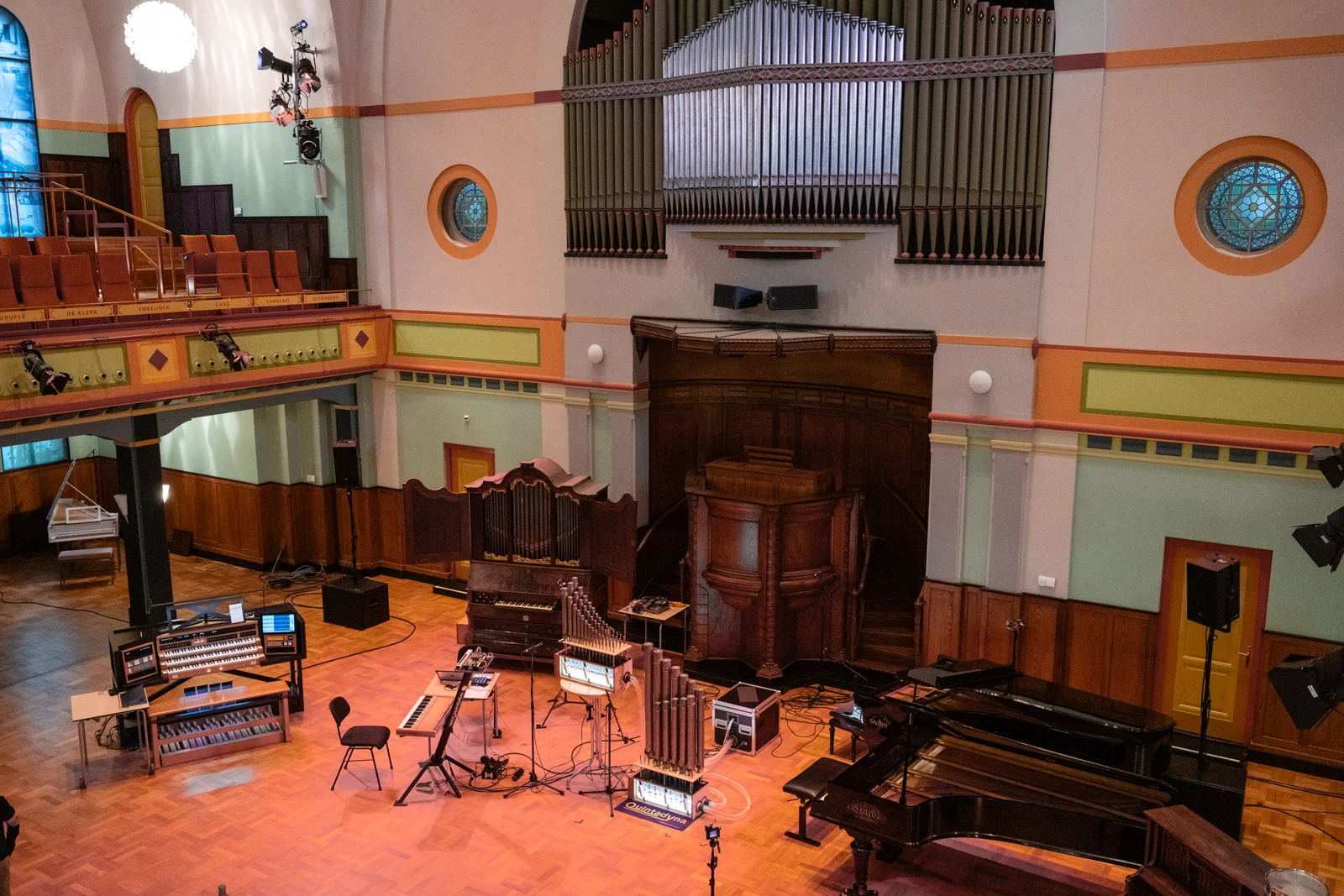
The technicians at the Amsterdam Orgelpark are puzzled: for the past fifteen minutes, a young organist has been sitting at the console of the Van Straten organ, producing strange sounds. Chords linger in the air for minutes at a time, held down by lead weights placed on the keys; then, with both hands, she moves the drawknobs millimetre by millimetre – precisely to the point where some of the pipes are just beginning to speak, tones struggle for survival, harmonies briefly emerge only to dissolve again into an ethereal hiss or a metallic ringing.
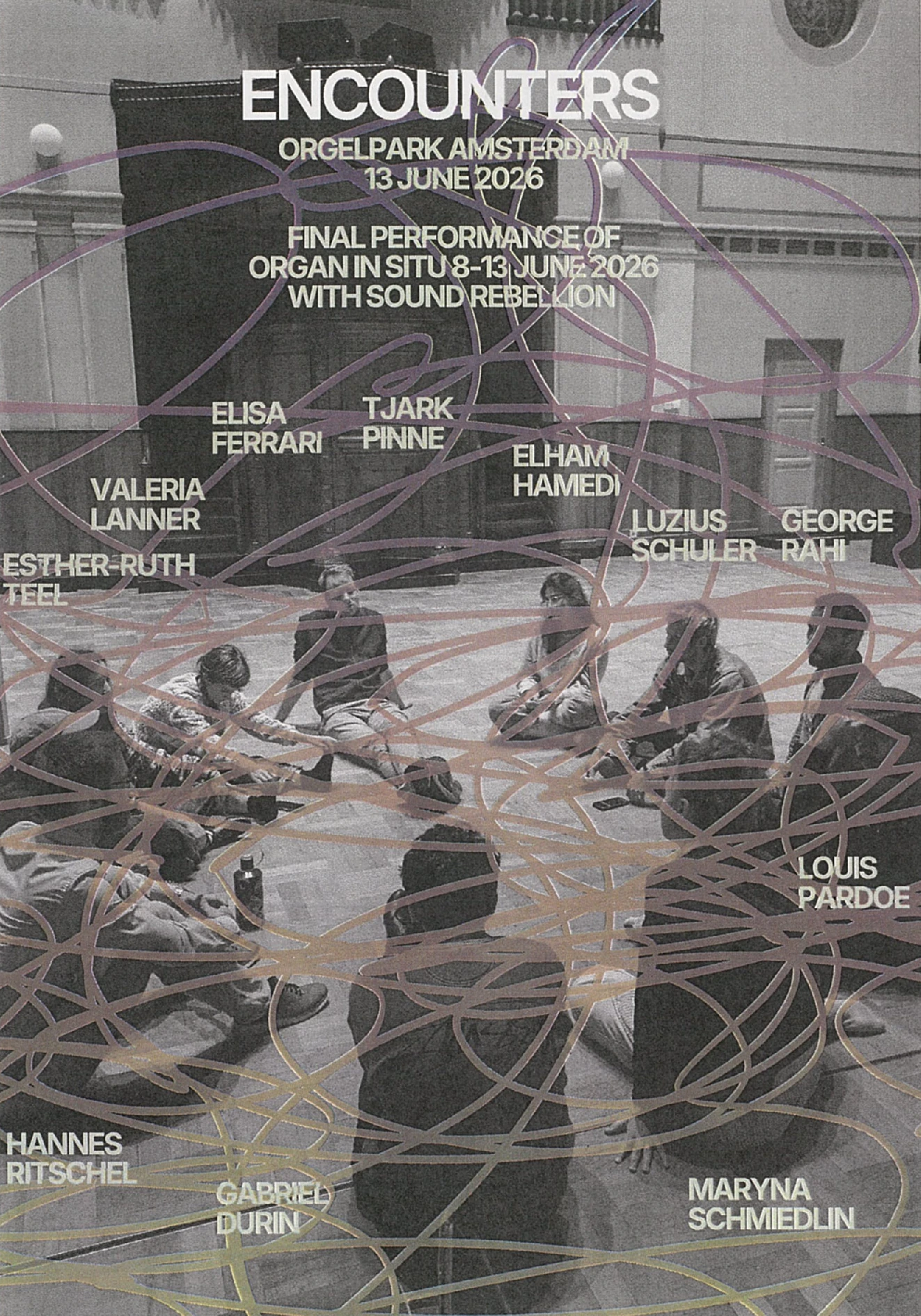
“We’re about to open the doors,” one of the technicians calls up to the organ loft. Since the Orgelpark began operating in the former church some twenty years ago, they have grown accustomed to unconventional performances – but rehearsing this close to the start of a concert? “It’s staying like this,” explains one of the workshop tutors from the artist collective Soundrebellion, whose members have travelled from Canada, Italy, France and Austria. This soundscape, poised somewhere between music and noise, will accompany the audience as they enter and then, almost imperceptibly, merge into the joint closing concert given by all participants in this year’s ORGAN IN SITU workshop, beginning with the actual performance by Elisa Ferrari from Vancouver.
Situational Musicking
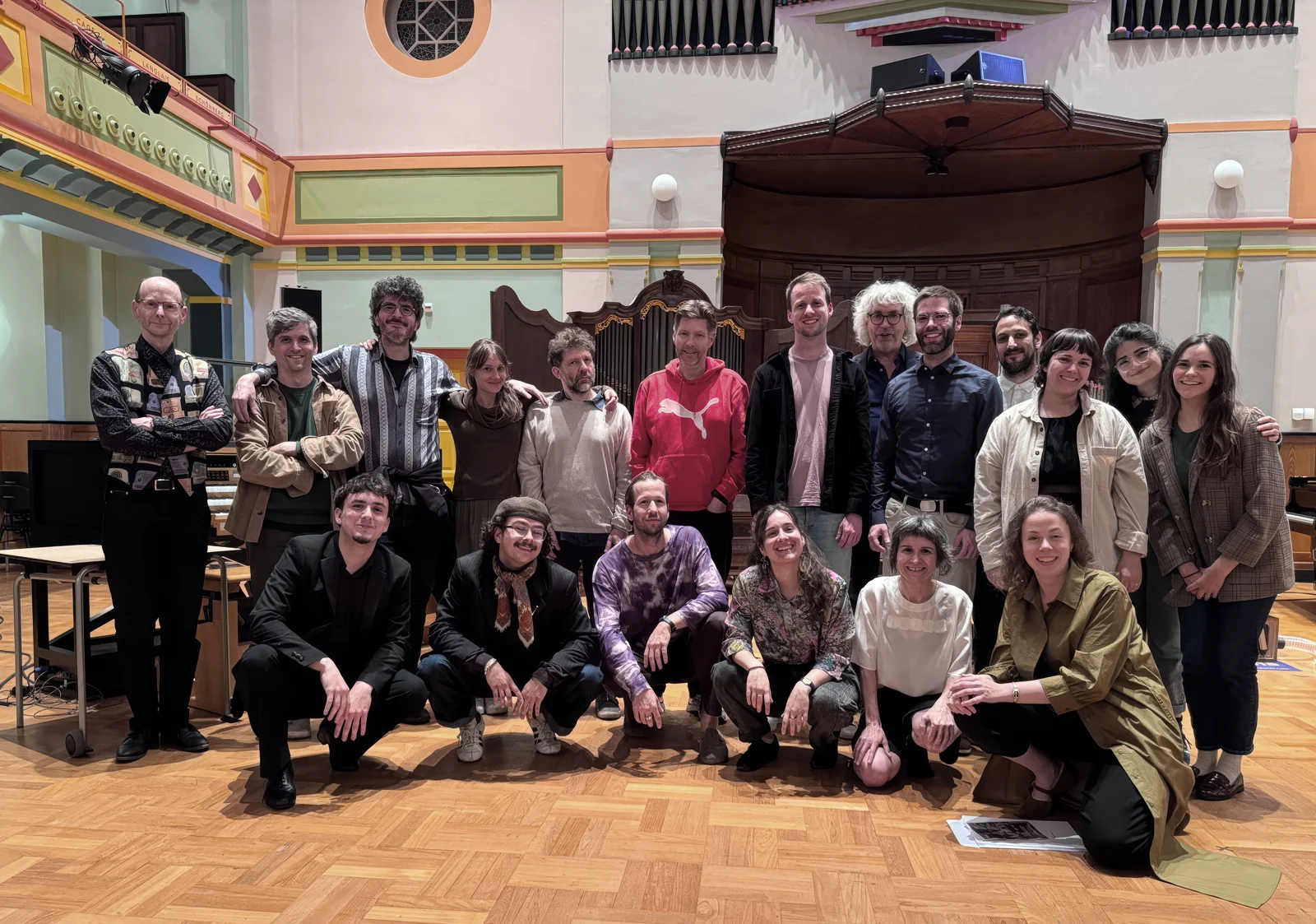
The intensive week had begun with this year’s Orgelpark Symposium on 4 June. Unlike in previous years, however, this time there was only one afternoon devoted to more or less music-theoretical presentations. Entitled “Situational Musicking”, the event was intended above all to provide space for musical performances of the most diverse kinds and for discussions about the countless ways of approaching the organ and working with the instrument.
The term “musicking” was coined by the New Zealand musician and music theorist Christopher Small shortly before the turn of the millennium. With this verb, derived from music, he sought to emphasise the act of making music itself: the interaction between musicians and instruments in the creation of sound – extending, in his definition, even to the mover who wheels the concert grand piano into the hall.
A term that seems almost tailor-made for the world of the organ, where instruments are created anew time and again: first designed component by component, then built, and finally assembled into a whole with its own individual voice. “Situational” alludes to the impossibility of separating the sound of the organ from the space with which it exists in symbiosis, as well as from the particular situation in which musicians produce sounds with the instrument.
It is remarkable how rarely this idea is articulated in organ building, where discussion often narrows to very specific details of the organ’s physical construction, while debates about sound are still frequently conducted in ideologically charged categories such as “neo-Baroque” or “Romantic”.
At the Orgelpark, by contrast, one fundamental question is almost always present: How can music be made with organ pipes in the first place? The Orgelpark’s hall, already amply supplied with sonic resources in the form of four stationary and five more or less mobile organs, acquired yet another large-scale sound system for the symposium, installed by the technicians of “4D Sound” over several days. The system comprised dozens of loudspeakers, some suspended from multi-ton metal trusses beneath the ceiling of the hall, others positioned on the organ galleries. The company normally uses systems of this kind to create immersive sound installations in museums and concert halls around the world. In his presentation, co-founder Poul Holleman demonstrated how the system locates sound sources within the virtual space between the loudspeakers, propelling them through the architectural space along three-dimensional trajectories or making them disappear through the ceiling or floor. In the fourth dimension – time – psychoacoustic simulations such as reverberation and sound reflections from virtual walls are added. The result, it seems, is a sonic space that can be shaped at will and has freed itself from the constraints of the natural world.
Yet when, in some of the pieces, real organ pipes and electroacoustics began to interact, scepticism became apparent on the faces of most of the listeners. As soon as even a mere handful of pipes of the Van Straten organ begin to sound – a meticulous reconstruction, completed in 2012, of the Netherlands’ oldest organ, dating from 1479 – the loudspeaker ensemble pales by comparison. The delicate medieval organ has a far more tangible acoustic presence in the space. The interference effects between the pipes of the Blockwerk on the first manual and the three stops of the Oberwerk can almost be felt physically. In certain intervals, the meantone temperament gives rise to fierce acoustic clashes. The electroacoustic simulation, by contrast, remains strangely sterile and remote.
Pipe vs. Loudspeaker
What might account for this? The discussion raises new questions: Are the loudspeakers simply not good enough, despite their special omnidirectional radiation pattern, which should in principle allow them to synthesise virtually any kind of sound field? Is there a fundamental difference between the way vibrating air columns in organ pipes excite the sound field within the volume of a room and the way loudspeaker diaphragms generate minute pressure fluctuations that then propagate to the listener’s ear?
On Sunday, the sound system was dismantled again; from Monday onwards, the eleven workshop participants were to turn their attention to analogue sound generators. The Orgelpark is one of the focal points of the “hyperorgan” scene, which seeks to free the sound of the organ from the rigid notion of the individual instrument as a self-contained entity inherent in traditional organ building – in extreme cases, even to detach it entirely from any single organ. Concerts have already taken place here in which instruments on different continents were linked via the internet.
The electronic console in the concert hall controls both the electro-pneumatic Sauer organ, installed in the then Parkkerk in 1922, and the “Utopa” organ, designed for the Orgelpark almost a century later and modelled on eighteenth-century instruments. Electromagnets intervene in its historically inspired mechanical spring-chest action, making it possible, via the touchscreen of the central console, to configure new stops from among the Utopa organ’s approximately 2,400 pipes. With a smile, Hans Fidom – an energetic organ researcher and one of the fathers of the Orgelpark concept – recalls how, of all people, it was a young French organist who, during concert rehearsals, told him almost indignantly that connecting two such different instruments to a single console simply could not work. But it can, according to Fidom’s maxim – provided one explores the sonic possibilities with an open mind, seeks out the sound concept best suited to the music in question, and simply leaves out whatever does not fit.
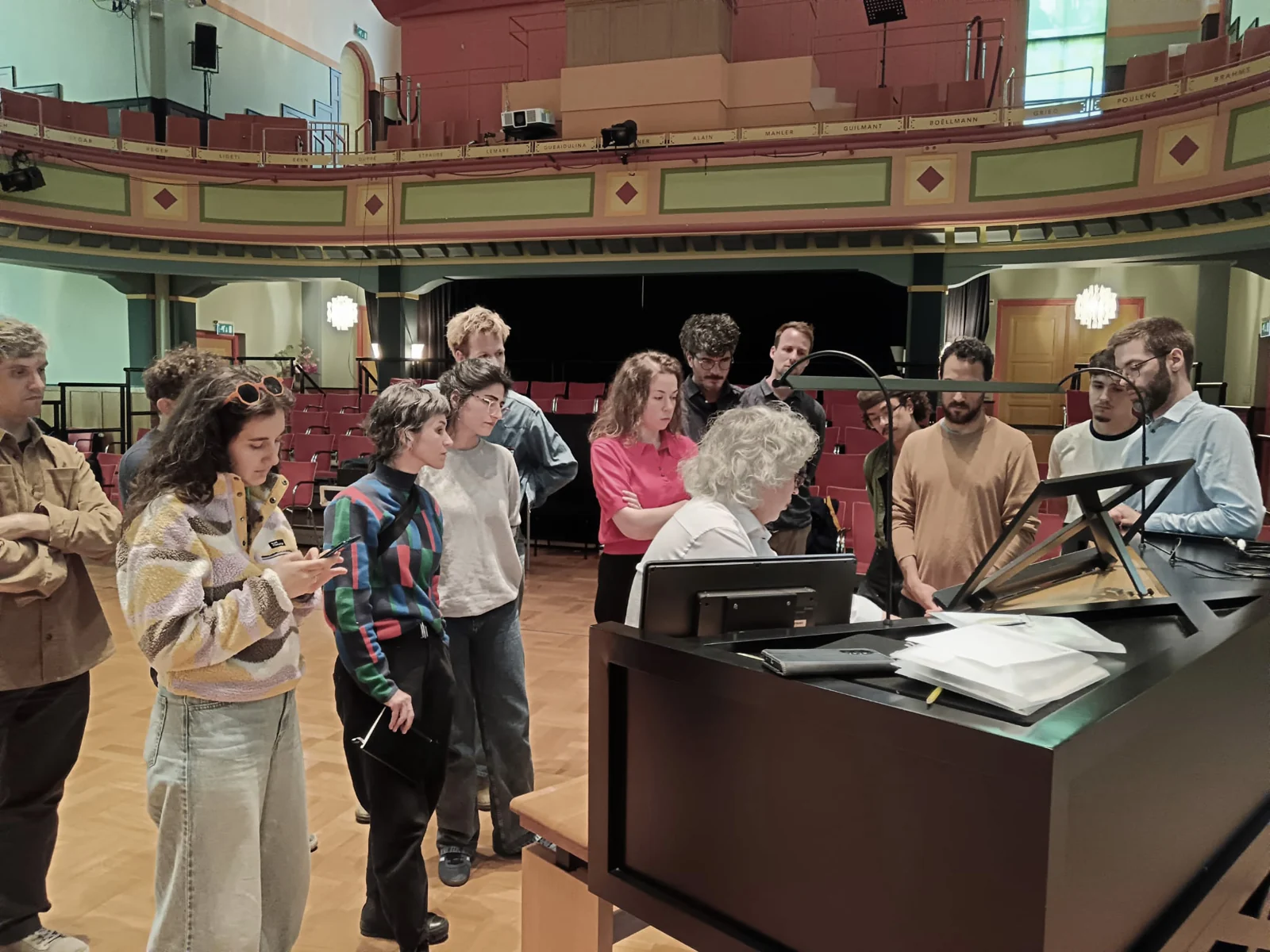
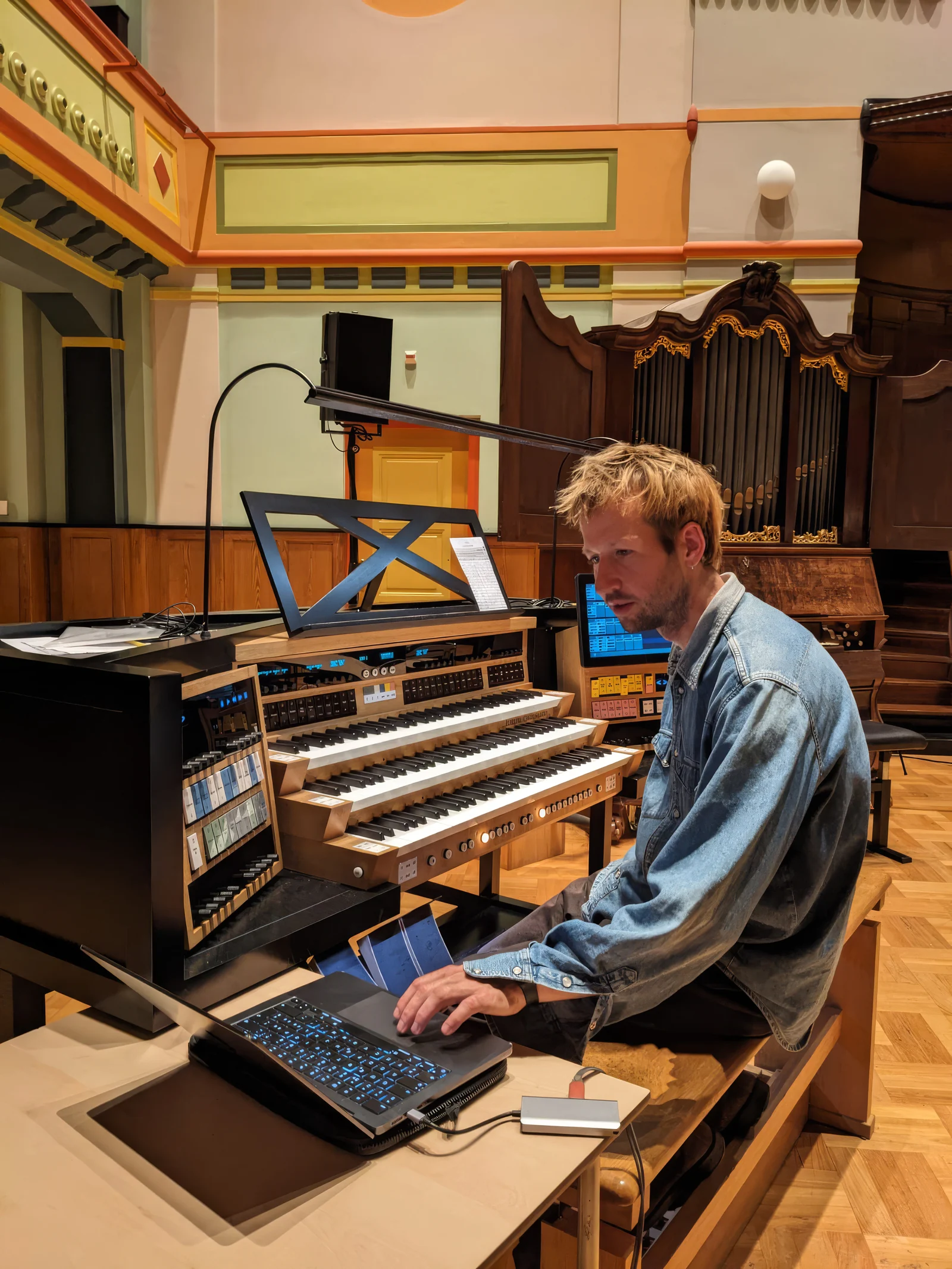
The artists taking part in the IN SITU workshop have free choice from among the Orgelpark’s entire collection of instruments, with six days to develop their musical ideas into performance-ready pieces. One might expect them to flock eagerly around the electronic console, whose fully equipped Sinua system can not only combine pipes freely into new stops, but also stack sounds in layers. Using additional functions such as pizzicato, delay or loop, these sonic layers can quickly transform simple chords into complex soundscapes.
Playing the Unplayable
In fact, some of the artists make use of the hyperorgan’s possibilities by connecting a laptop to the console and using MIDI software to produce otherwise unplayable arpeggios, create shimmering sound textures or unleash massive sonic storms from the organs as an ensemble.
Inspired by the idea of “musicking”, however, many also experiment inquisitively with a cabinet organ dating from 1767 or with the Verschueren organ, which has entirely mechanical action and is clearly modelled on Cavaillé-Coll, while extensively exploring the medieval sound world of the Van Straten organ.
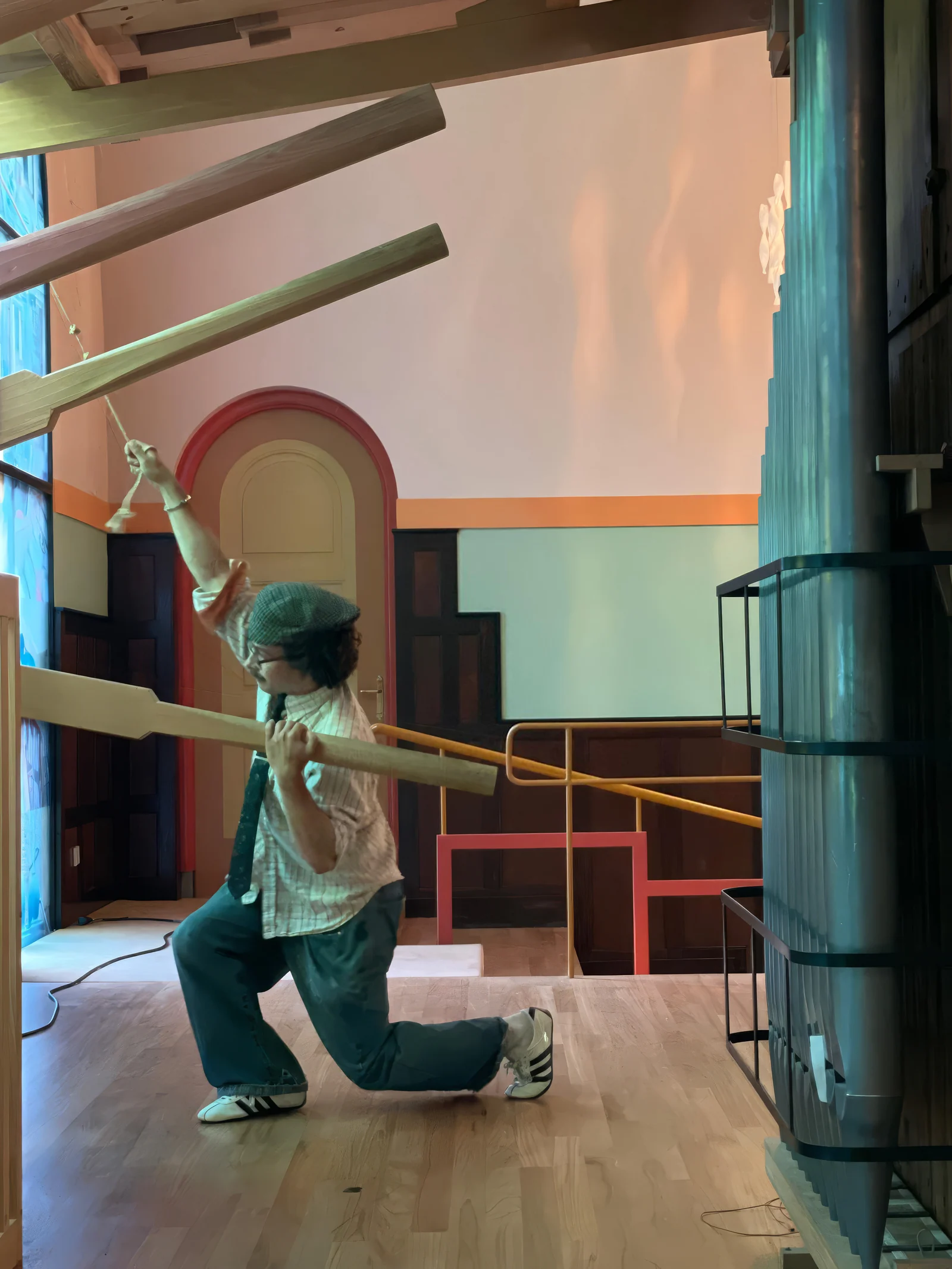
When someone hangs from the operating rope of one of the historically constructed wedge bellows or presses down on the bellows boards to modulate the wind pressure rhythmically, it looks almost acrobatic. In another performance, Bourdon tones morph into human overtone singing.
The Quintadyna & Linear Valves
Especially for the workshop, we had brought along the “Quintadyna” – the first organ equipped with Linear Valves. The Orgelpark had also played a major role in its development. At the 2024 symposium, organist Jakob Lkk had lamented that he was considering giving up playing the organ unless he finally gained the ability not only to start and stop notes, but also to shape them while they were being sustained.
“That can be done,” I confidently promised, taking it as a challenge for the following year’s symposium. After all, for more than twenty years I had been thinking about how electronic key actions might move beyond the simple on/off operation of conventional designs. So-called proportional key-action systems offer little improvement if the enormous effort involved in using special actuators that precisely follow the movement of the key ultimately comes to nothing because, at the windchest, all they do is open and close a conventional pallet valve. By their very design, these pallets are always oversized. As soon as one is opened by barely a millimetre, a single pipe on the key channel already reaches full speech. Moving through the remainder of the pallet travel in fine increments yields no further acoustic benefit.
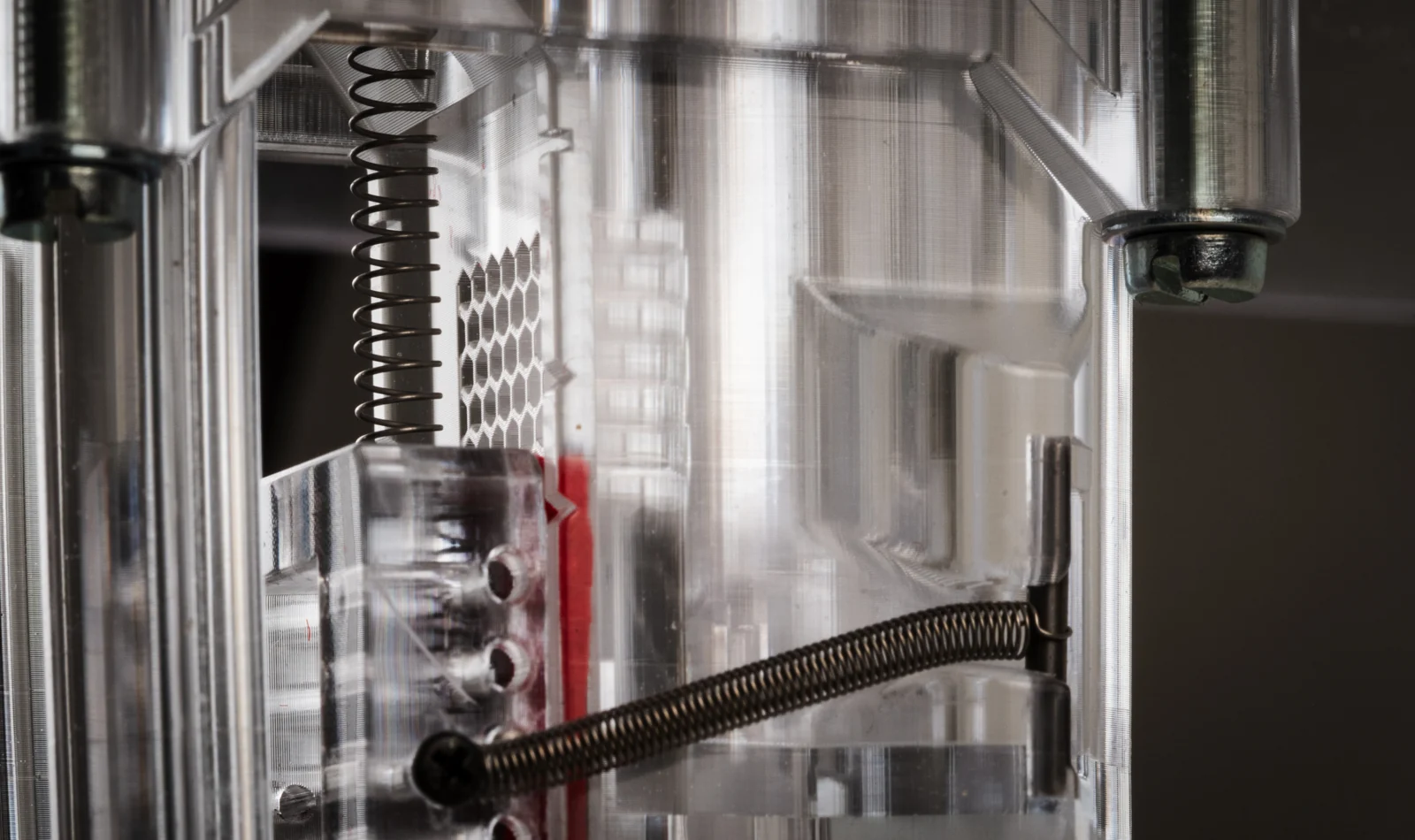
In ISO Journal No. 80, I described the design of the Linear Valve in detail. Here, the airflow to the pipe is not opened by a flap or disc. Instead, the valve consists of a slider that progressively exposes the airflow passing across it. This immediately eliminates the abrupt breakaway point – the “pluck” – characteristic of conventional valves. Controlling the transition through this point is otherwise extremely difficult, since the moment the valve begins to open, pressure equalisation between the windchest and the key channel causes all the forces involved to change abruptly.1
The slider of the Linear Valve, by contrast, can be opened continuously over its entire range of travel. Moreover, rather than simply uncovering a single aperture, it opens a succession of tiny honeycomb-shaped channels. As a result, every movement of the valve can produce a finely graduated change in airflow, regardless of how far the valve has already been opened.
Finally, there is an adjustment cylinder within the valve body that allows the maximum wind flow to be individually matched to each pipe. Only in this way can the gradual opening of a valve fully exploit all the possibilities for modulating the pipe’s sound – from the first whimpering noises before the tone properly develops, through restrained speech, to the full steady-state tone. At the 2025 symposium, I was able to demonstrate this for the first time using a pipe from a 2' Octave Principal stop – and, of course, further questions immediately arose: Does it also work in the lower registers? What effect does a Linear Action have on other stops?
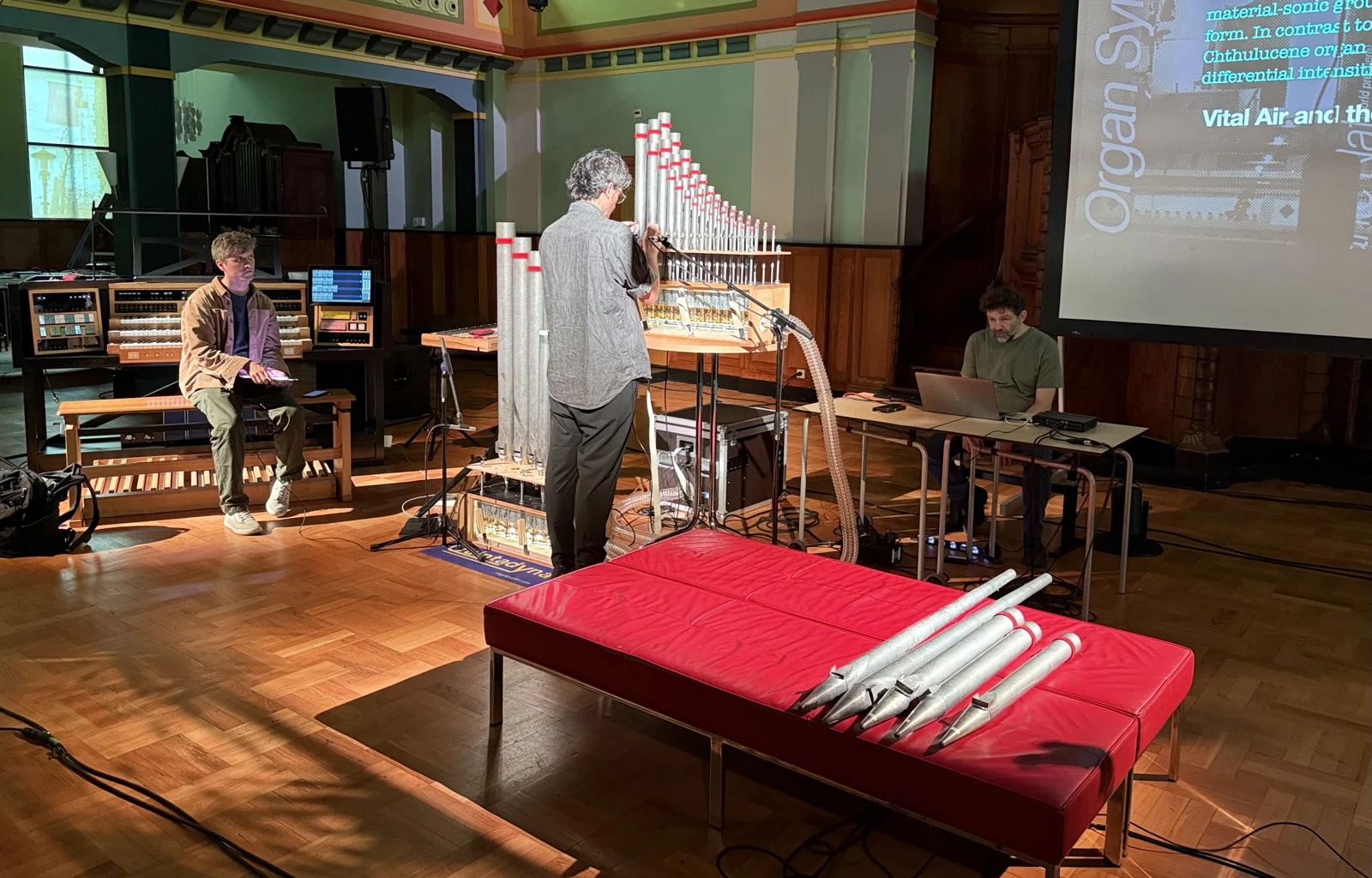
At the beginning of this year, the opportunity arose to acquire a complete 8' Quintadena stop dating from the 1970s or 1980s. Its characteristic sound is distinguished by a prominent fifth harmonic, which responds particularly sensitively to changes in the wind supply. This gave rise to another rather ambitious idea: to build an instrument from it in time for the workshop – the “Quintadyna”, designed for particularly dynamic playing. For the comparatively bulky 8' octave, we developed a further variant of the Linear Valve, with a wider valve slider and roughly twice the wind-flow capacity. Logically enough, the two valve versions are now called “L8” and “L4”. A slimmer “L2” is in the planning stage.
From resin to sound
This rapid pace of development is made possible above all by the remarkable advances in 3D-printing technology. Although the term “3D printer” may still evoke the hobbyist scene, with nerds using home-built machines to produce Star Wars figurines, “additive manufacturing” has long since become a professional field.
There is scarcely any other economical way of producing one-off parts, fixtures and very small batches, while scaling up production to quantities in the hundreds is supported by a wide range of service providers that reduce the entire process – from the design drawing and request for quotation to delivery within a matter of days – to just a few mouse clicks.
Three printing processes are affordable and suitable for use in organ building. FDM (Fused Deposition Modeling) is the best-known method: a moving print head melts the material by heating it and deposits it layer by layer in precisely the required location. The desired component thus gradually takes shape from the solidifying droplets or strands of material. The process is relatively inexpensive, and modern materials – including carbon-fibre-reinforced plastics – make it possible to produce components capable of withstanding high mechanical loads. One drawback, however, is that the individual layers usually remain clearly visible.
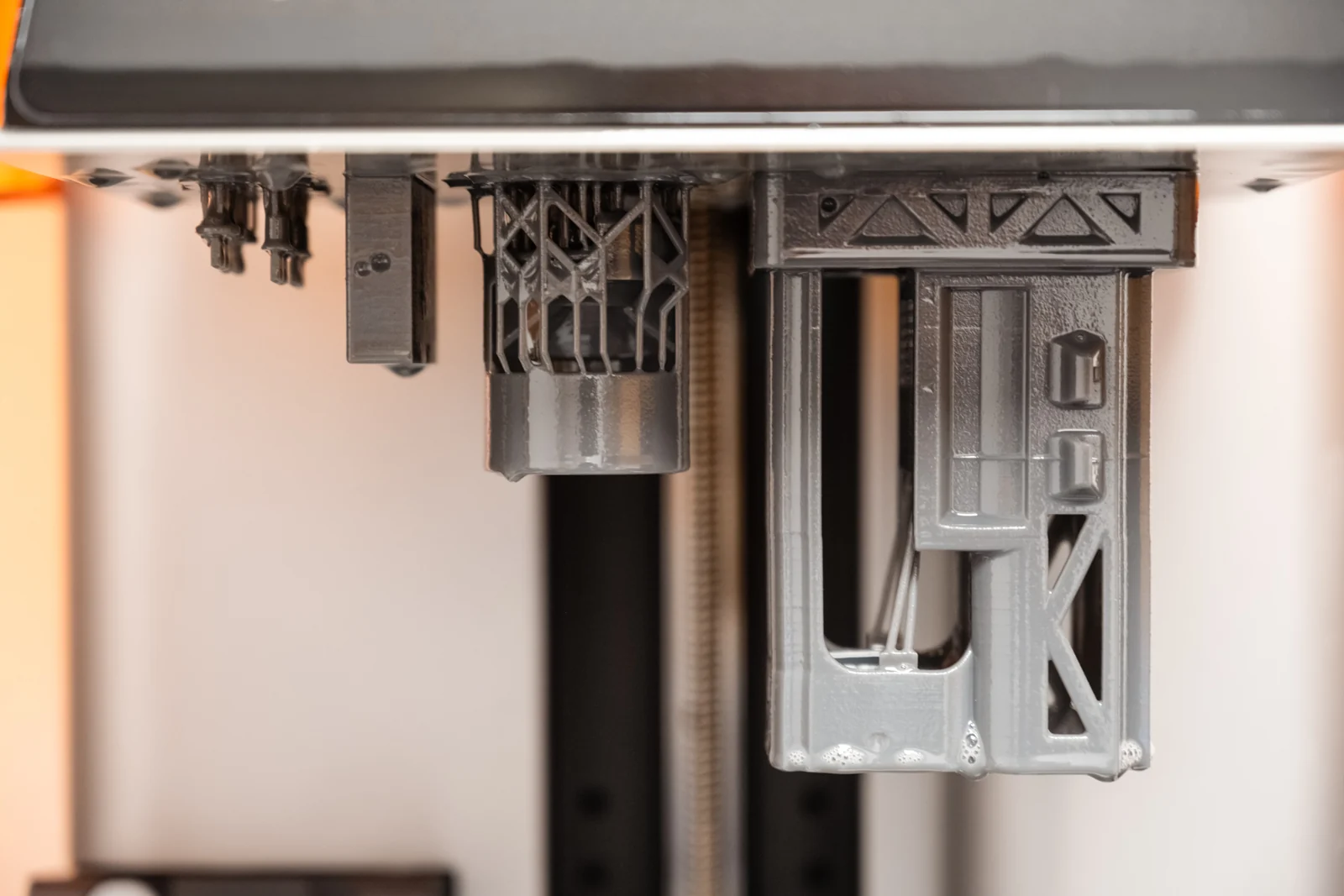
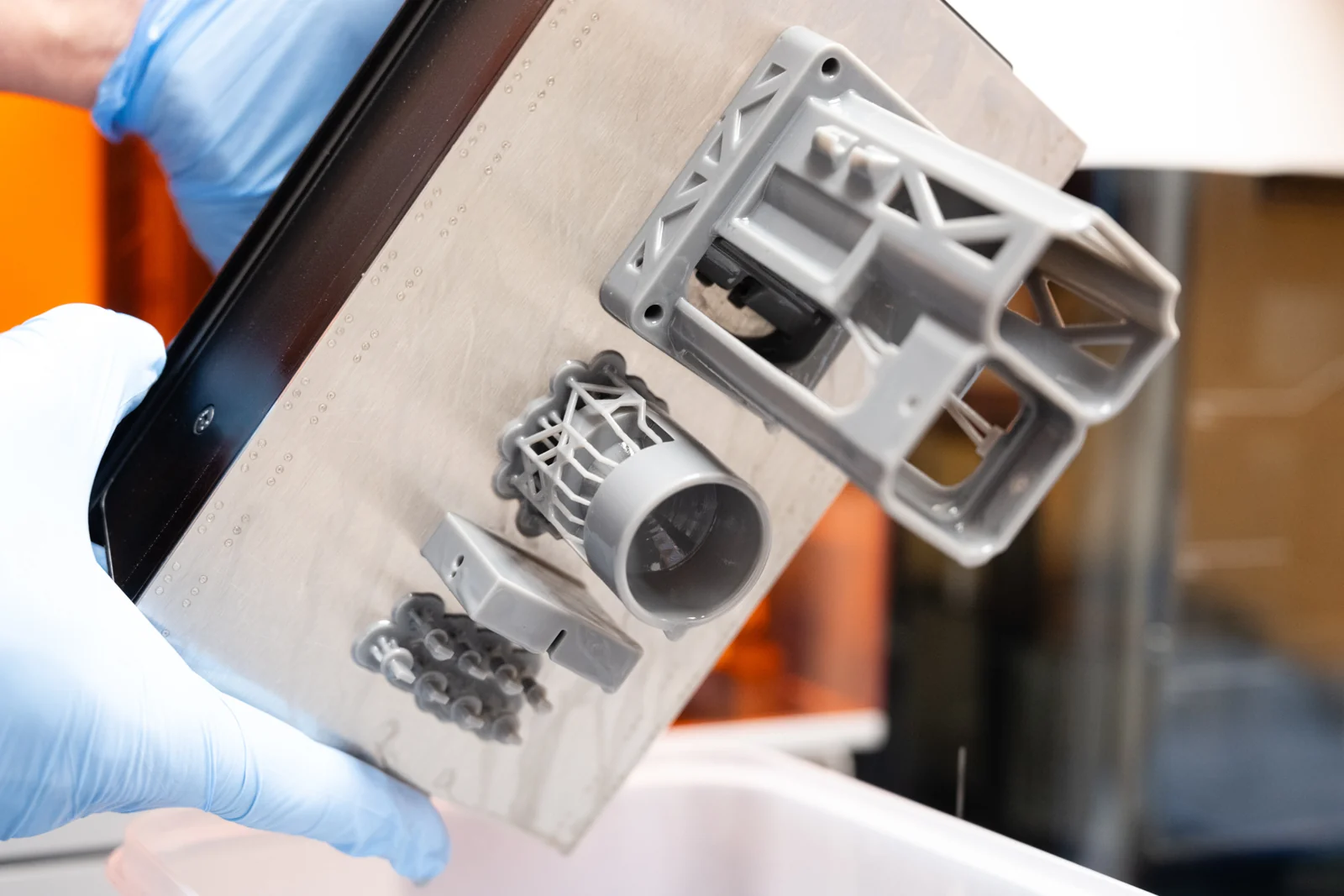
In an SLA (stereolithography) printer, liquid photopolymer resin flows into a resin vat, at the bottom of which a type of screen is installed. For about one second, the screen exposes the resin to ultraviolet light in the shape of the required cross-section, curing a layer of resin only a few hundredths of a millimetre thick. This photopolymerisation process is similar to the curing of composite fillings at the dentist. Thanks to these very fine layer thicknesses, the printed components can achieve extremely smooth surfaces. Different resins are available for different applications: particularly rigid materials for highly precise contours, tough resins capable of withstanding high mechanical loads without breaking, and even soft polymers from which, for example, the soles of prototype sports shoes can be printed. Because a single exposure cures an entire layer across the resin vat, even large components or complete batches of small parts can be printed within just a few hours. However, post-processing – including washing away residual liquid resin and final curing – requires additional steps.

Selective Laser Sintering (SLS) and Multi Jet Fusion (MJF) are primarily the domain of larger service providers. In these processes, either a modulated laser beam or a precisely metered fusing agent applied by inkjet-type printheads causes fine polymer powder to fuse together layer by layer. Large machines can produce hundreds of components simultaneously within their build chambers; once printing is complete, the parts are excavated from the powder bed and cleaned. In series production, the parts are considerably less expensive than when produced individually, although the powder-based process leaves them with a certain degree of surface roughness.
As part of a feasibility study on additive manufacturing processes in organ building, funded by the German Federal Ministry for Economic Affairs and Climate Action, we had acquired an SLA printer. The small machine was kept busy for several days producing the nearly 100 valves required for the development of the Quintadyna. We printed six of the seven components of each Linear Valve ourselves, while the comparatively simple coil former for our custom-developed linear solenoid was produced by a service provider using MJF.
The 56 pipes of the Quintadena were supplemented by a further borrowed treble octave from a string stop, enabling the Quintadyna to be played at both 8' and 4' pitch. Organ builder Markus Harder-Völkmann managed the remarkable feat of accommodating all 68 sound generators on two windchests just 70 centimetres wide – the tried-and-tested dimensions of the 2025 demonstration windchest. After all, the design brief was quite simple: “Everything has to fit into Jürgen’s estate car.”
A new kind of touch
From the outset, the electronic infrastructure of the Linear Valve technology was designed to be as simple as possible. The proven magnetic key sensors of the Espressivo system were given a software upgrade. The sensors now transmit not only on/off signals, but also so-called controller messages throughout the entire range of each key movement, with a resolution of 127 steps.
The valve control system also differs little from the wiring used for conventional action magnets. Thanks to the special design of the solenoid coils, the valve moves continuously in proportion to the applied voltage. As before, therefore, only two wires are required for each valve. The Espressivo windchest module was given an additional operating mode that modulates the voltage applied to the solenoid according to the positional data received from the keyboard.
The windchest module thus remains the universal control centre: in addition to conventional on/off switching, it can also control conventional action magnets in response to key velocity and now Linear Valves as well.2
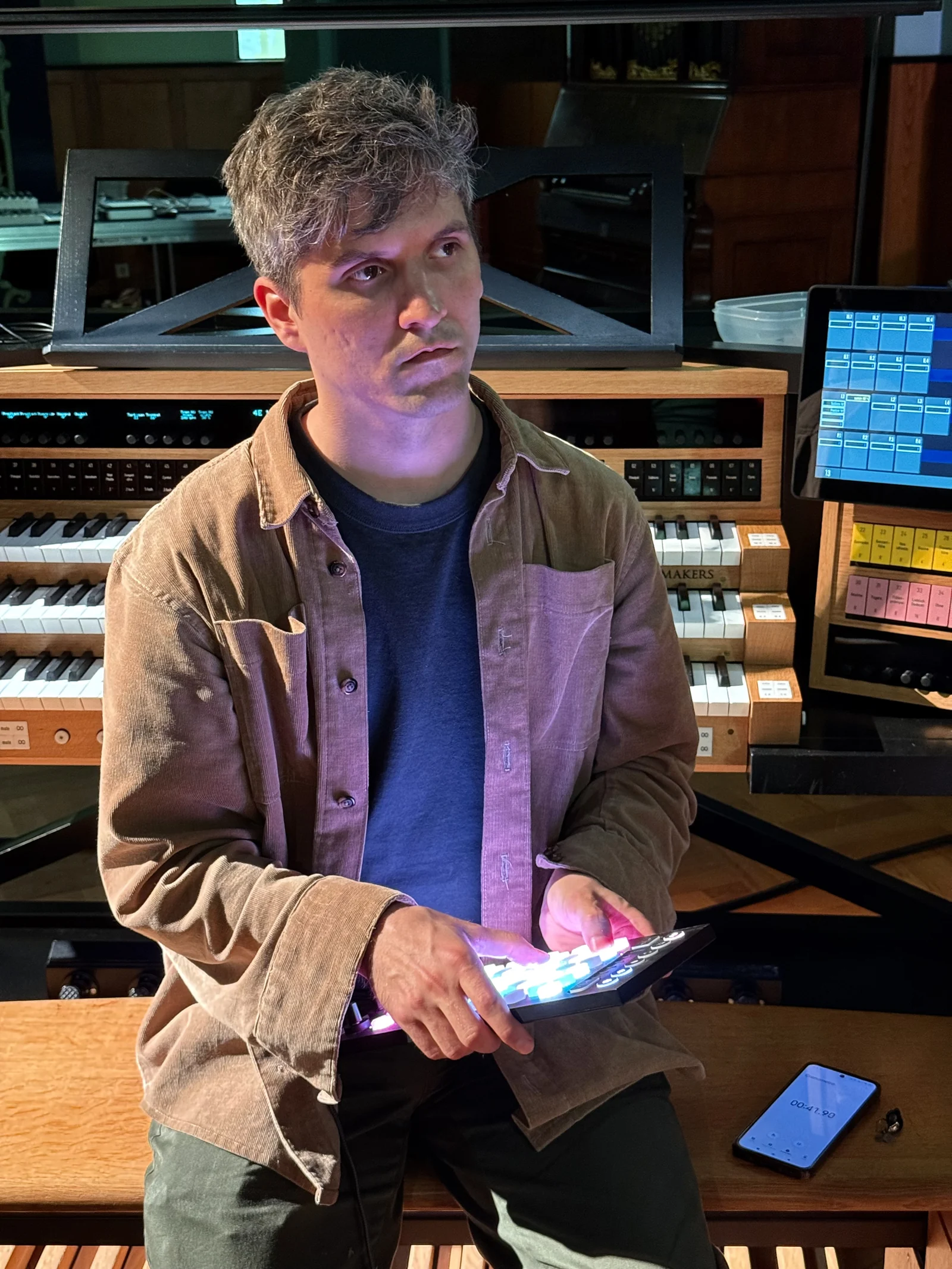
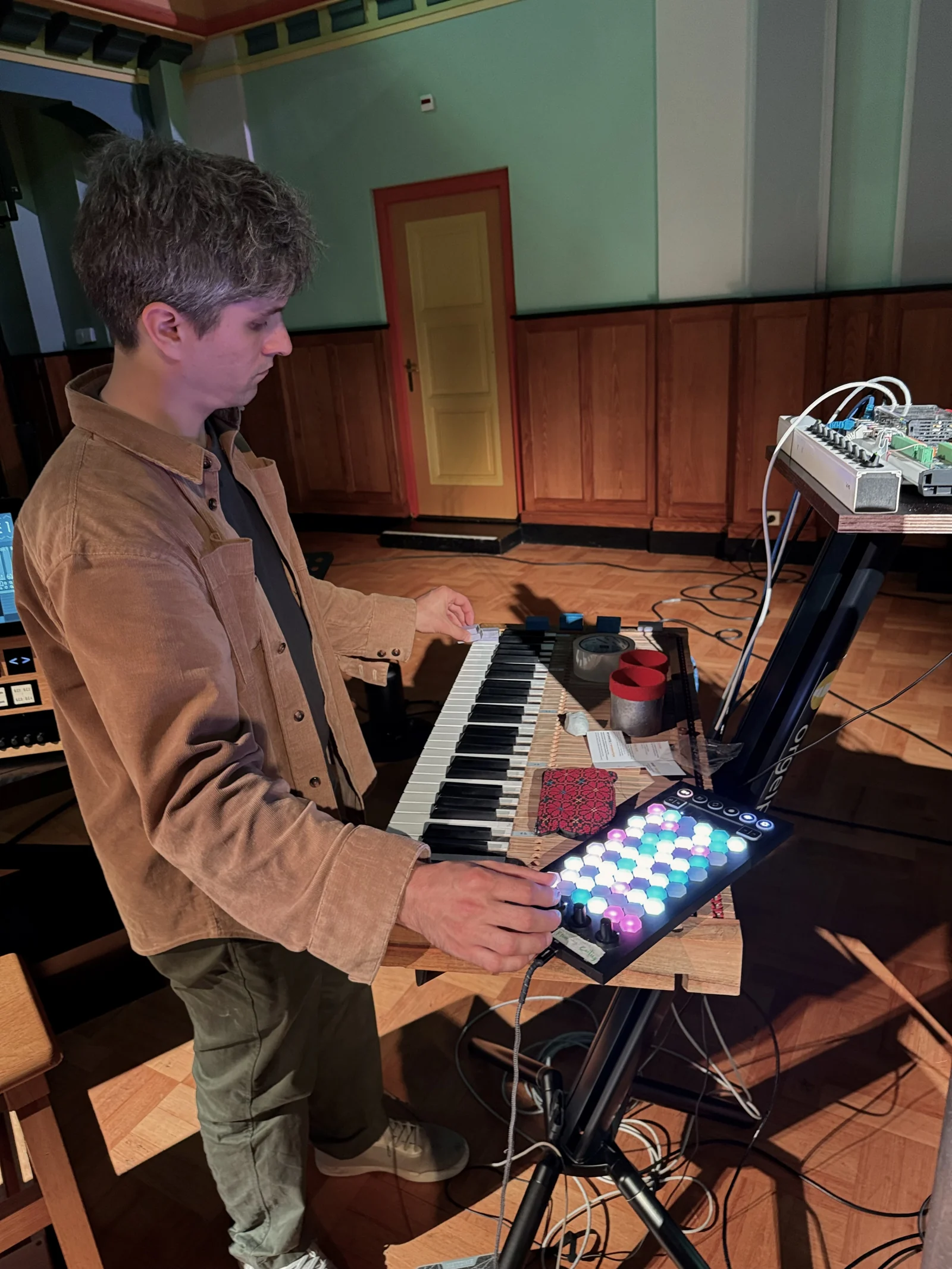
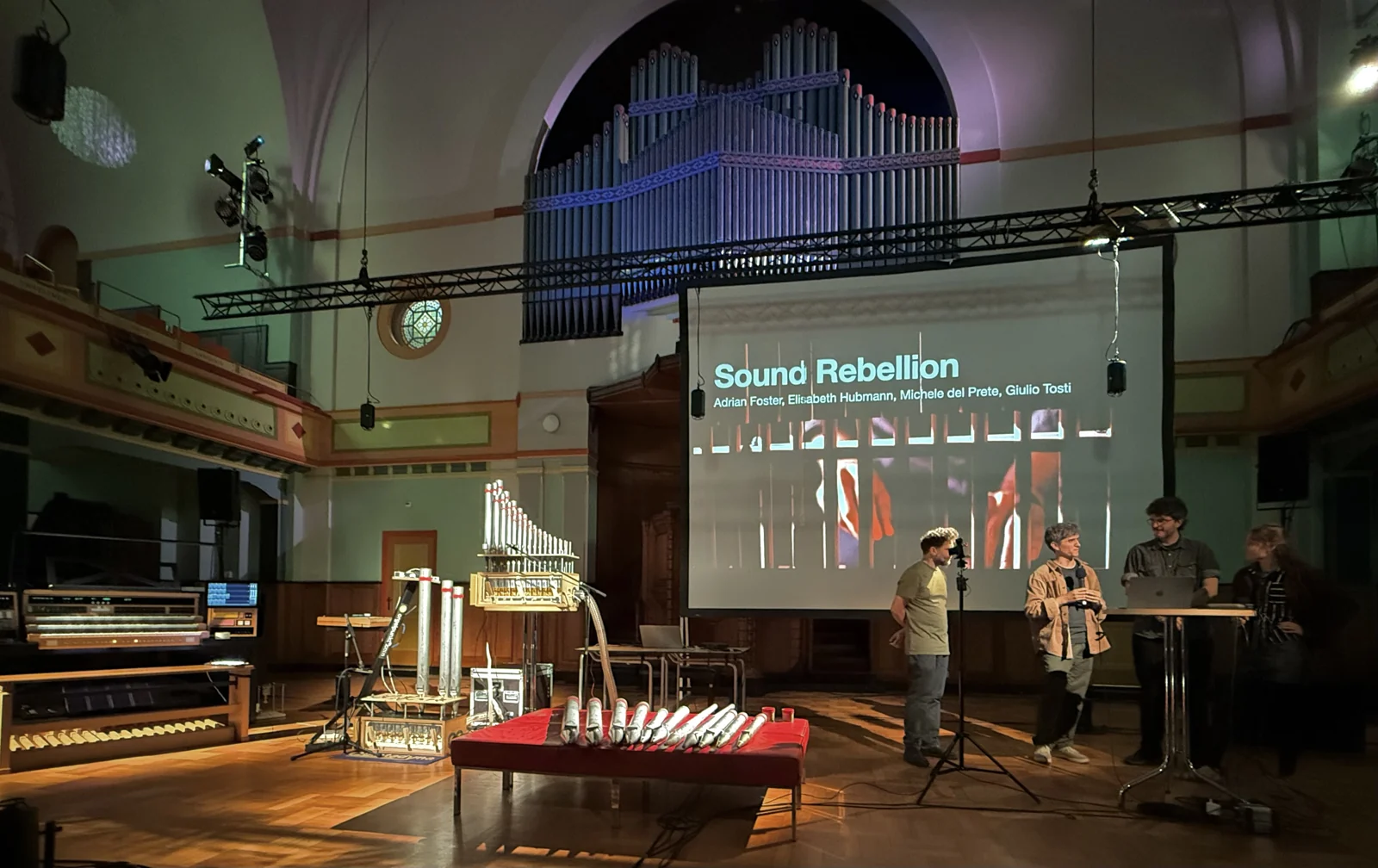
Adrian Foster, the Canadian member of “Sound Rebellion” and an accomplished sonic experimenter, brought along the “Exquis” controller made by the French company Intuitive Instruments. With its hexagonal keys, the device bears only a distant resemblance to a conventional keyboard; yet although the rubber keys hardly move, they respond sensitively to the amount of pressure applied to them. Translated into control commands for the Linear Valves, this allows Foster to make the Quintadyna sigh and then fade away with a flute-like sound.
Moving the Air
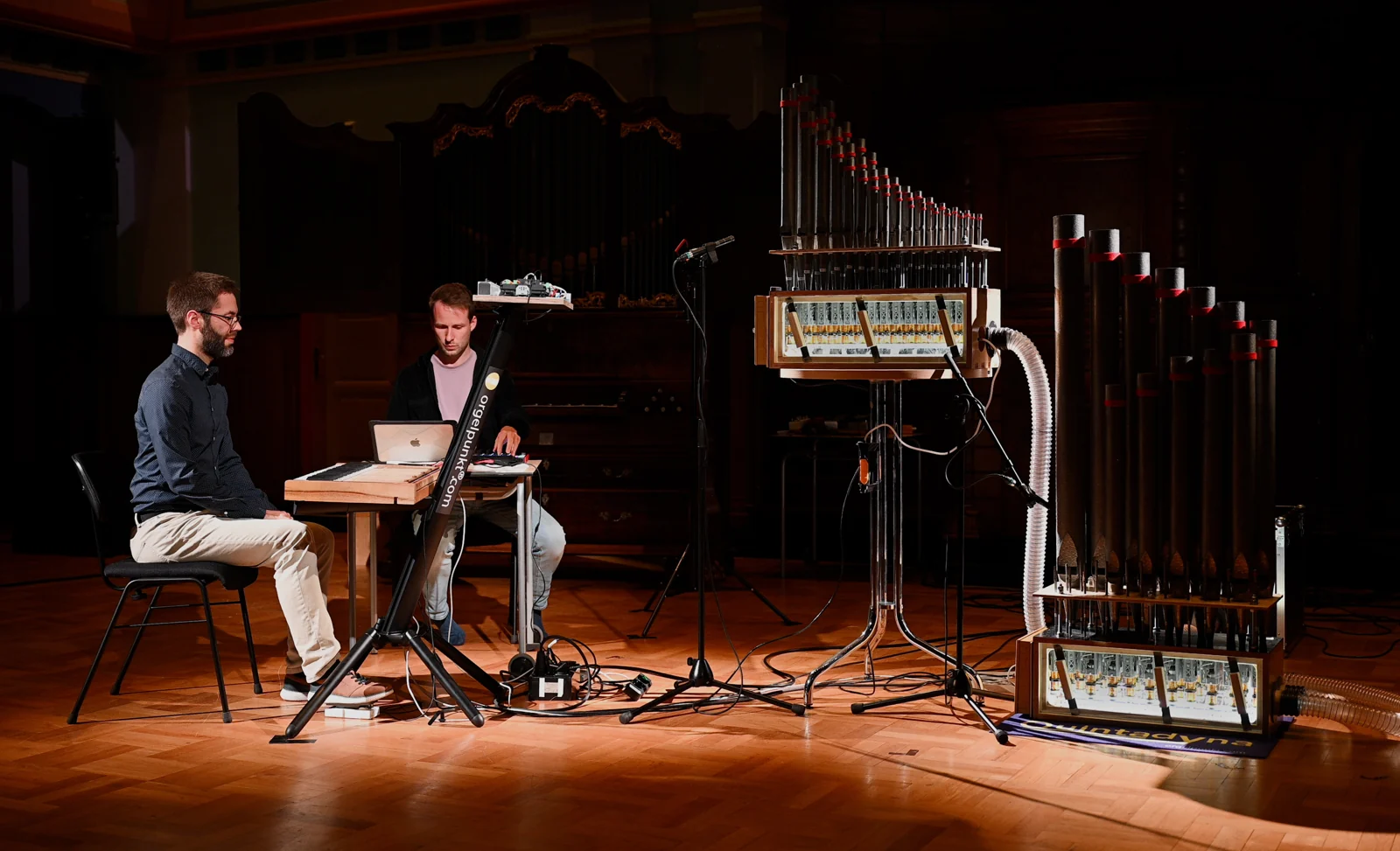
While most of the workshop participants, many of them of student age, are busy exploring the main hall of the Orgelpark, the Quintadyna stands in the foyer, where it is being investigated by two veterans of the “IN SITU” programme. Tjark Pinne, cathedral organist in Oslo, has travelled from Norway, while Hannes Ritschel is Professor of “Organ Art – Concepts of Creativity – AI” at the University of Music Würzburg. Together, they are developing the piece “Moving the Air”.
 Watch performance9:03
In the performance, the artists alternate between a conventional organ manual and a laptop. We salvaged the keyboard from an electric-action console dating from the 1980s. Its conventional brush contacts were replaced by Espressivo sensors, and the bare keyboard now rests on a minimalist keyboard stand. Ritschel trains his sensitivity by depressing the keys millimetre by millimetre – a playing technique that has no place in the traditional repertoire of organ technique. Listening intently, he follows the beats that arise as adjacent notes merge into one another through valves that slowly open and close.
Meanwhile, Pinne is assembling note sequences on his laptop. Ableton Live, software otherwise used almost exclusively for sampling and controlling electronic sound generators, is now, under his direction, controlling the sound of organ pipes. Rapid arpeggios played with the valves barely open coax sounds from the Quintadyna that are reminiscent of birdsong. The lightweight valves nimbly follow sequences that would be impossible to play with human fingers. In the piece, bass notes swell and recede with a horn-like quality.
At first, the windless passages make me slightly uneasy, as Pinne and Ritschel rhythmically fire all the valves at once in staccato bursts. Will I have to reach for the box of spare parts I prudently brought along to replace battered plastic components? But the cordless screwdriver stays in the toolbox. Even after a week of intensive punishment, there is no wear to report. This endurance test can safely be regarded as the equivalent of one or two years of normal concert use.
An invitation to experiment
The Linear Valves will continue to incorporate 3D-printed components in the forthcoming projects we are planning with organ builders. Conventional manufacturing would require a far greater number of individual parts, and having conventional injection moulds made for each of them, or machining the parts individually, would simply be prohibitively expensive. The many small modifications made over the past few months, which have repeatedly enabled us to optimise either the function or the assembly process, would likewise be inconceivable if we had to regard every component as provisionally final and commit to producing it in significant quantities. After all, manufacturing each project according to the latest state of experience and development has always been one of the defining characteristics of organ building.
And so the Quintadyna, too, will continue to evolve. The blower is installed in a transport case and feeds the wind directly into the windchests through flexible hoses, without any bellows. If desired, a pedal can be used to vary the speed of the motor – an intervention that has a much more immediate effect on an instrument of this miniature scale than it would on a large organ. This opens up yet another field of experimentation for exploring sound beyond conventional playing techniques.
For the time being, the transport case still contains a conventional organ blower dating from the Laukhuff era. Despite everything, its response to changes in frequency remains relatively sluggish because of the considerable mass of its impeller. But we are already experimenting with blowers of entirely different designs. By the time of the next Orgelpark Symposium, this may open up further interesting possibilities.
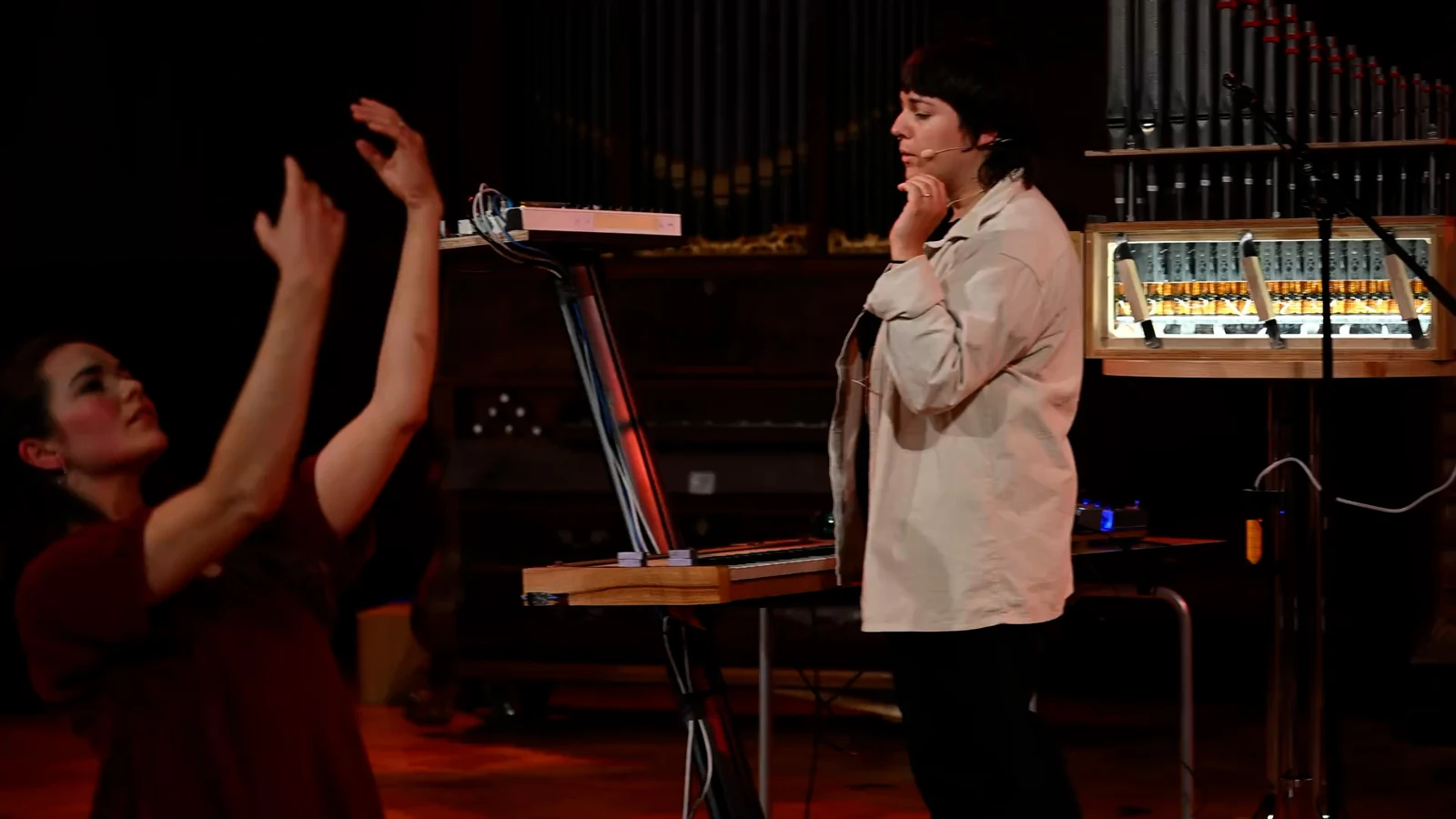
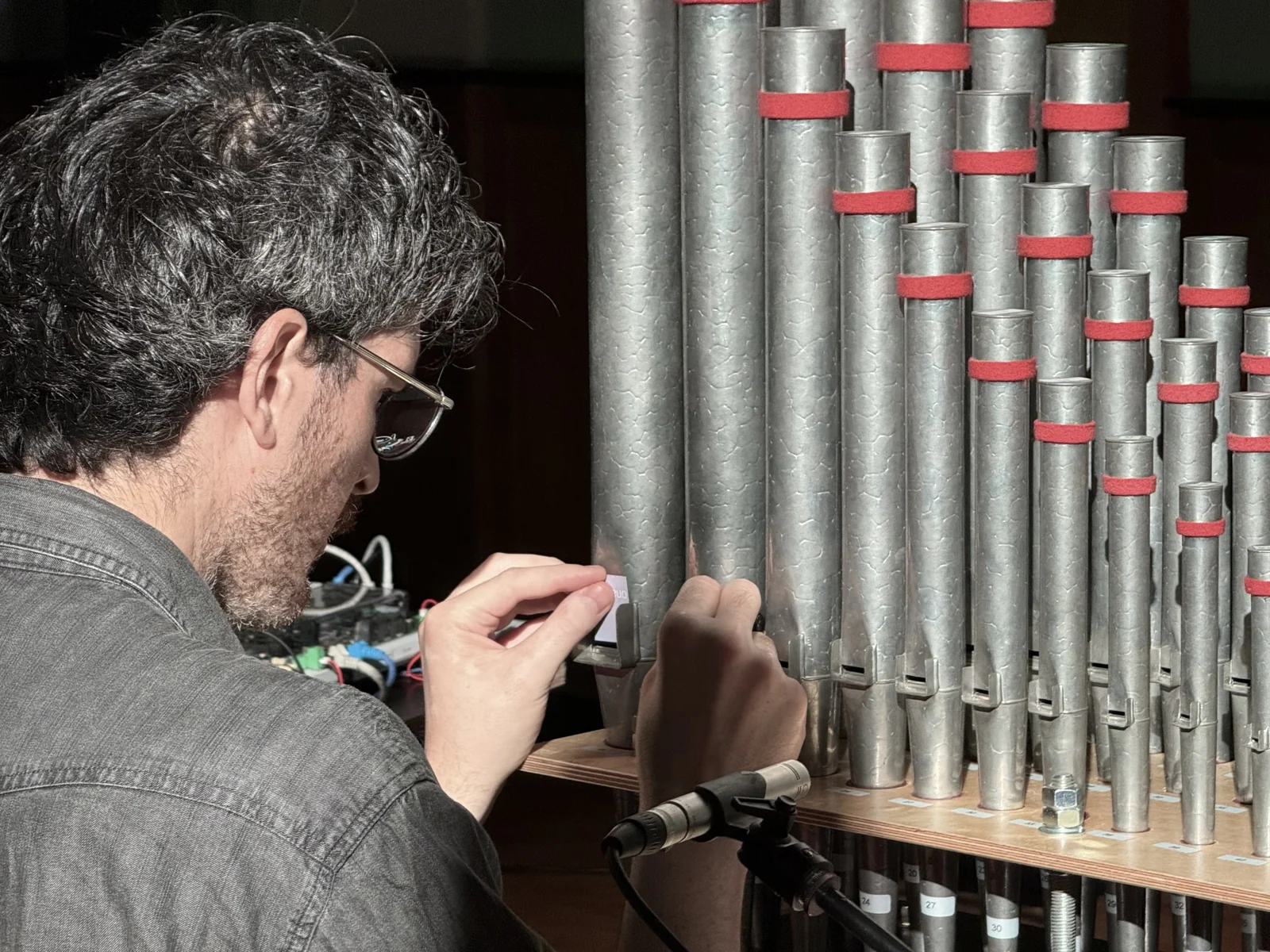
In any case, the artists at the Orgelpark seem to find every conceivable way of interacting with the sound of organ pipes. At the end of their piece, the members of Soundrebellion remove the pipes from the windchest one by one, each falling silent with a brief squeal. Esther-Ruth Teel from Montreal places a chest organ beside the Quintadyna. While the little organ continues to sound with its keys held down by weights, Teel manipulates the lips of the Quintadena pipes with strips of paper and sings harmonies against the distorted tones.
 Watch performance10:29
The Amsterdam Orgelpark is a place of avant-garde experimentation. Yet its impulses for conventional organ building should not be ignored. Anyone engaging with the new valve technology will discover intriguing challenges for voicing: where achieving a clean onset and release of each pipe would normally mark the end of the process, the question now becomes what should happen before and after the stable tone. How does a pipe respond to a gradual increase in wind? Should the rough transients be brought out as part of its tonal character, or suppressed? Should the organist be able to control the spitting quality of a stop through the touch as a means of articulation, or will it be perceived as intrusive?
 Watch performance13:08
What some experience as a liberation and a source of new sonic possibilities may unsettle others: touch-sensitive stops leave little room for technical uncertainty.
The dialogue between organ builders and artists needs to be intensified, because what constitutes the very essence of organ sound is open to broader interpretation today than ever before. At a time when budgets for lavish new instruments are becoming scarce, we should seize the opportunity for creative experimentation through imaginative alterations and additions to existing organs. Small interventions can often have a major impact – one simply has to be willing to take the risk.
References
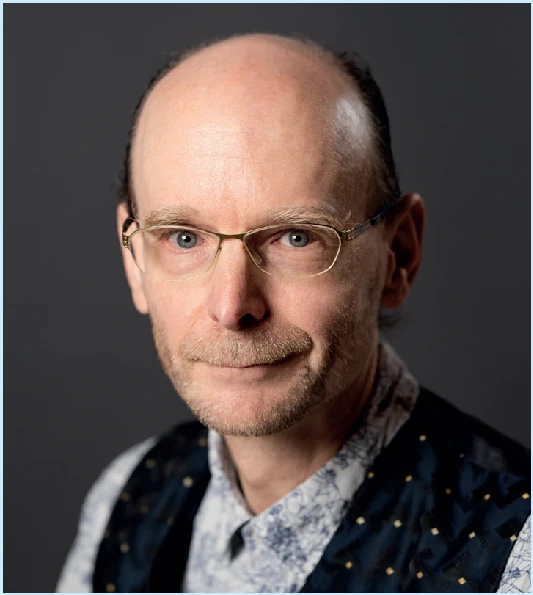
Jürgen Scriba
Jürgen Scriba is one of the most active innovators in the small community of organ electronics developers. He studied physics and computer science in Hamburg and earned his doctorate in experimental physics in Munich. After a longer detour into science journalism as an editor for the magazines Focus and Der Spiegel, he founded a biotech start-up, which he led for six years as head of development until it was acquired by a Japanese medical device corporation.
His passion for music brought him into contact with organ building in the late 1990s, and he began developing his own control systems. The Espressivo action system was created in cooperation with Aug. Laukhuff GmbH, where from 2014 to 2019 he also headed the console building and electronics department.
For more than ten years, he has been advocating for open, manufacturer-independent communication in organ data networks. The Espressivo MIDI standard is now widely used.